
Make Breizh & Ryukyu your preferred source on Google
Get our newest Okinawa stories, travel tips and itineraries featured directly in your search results.
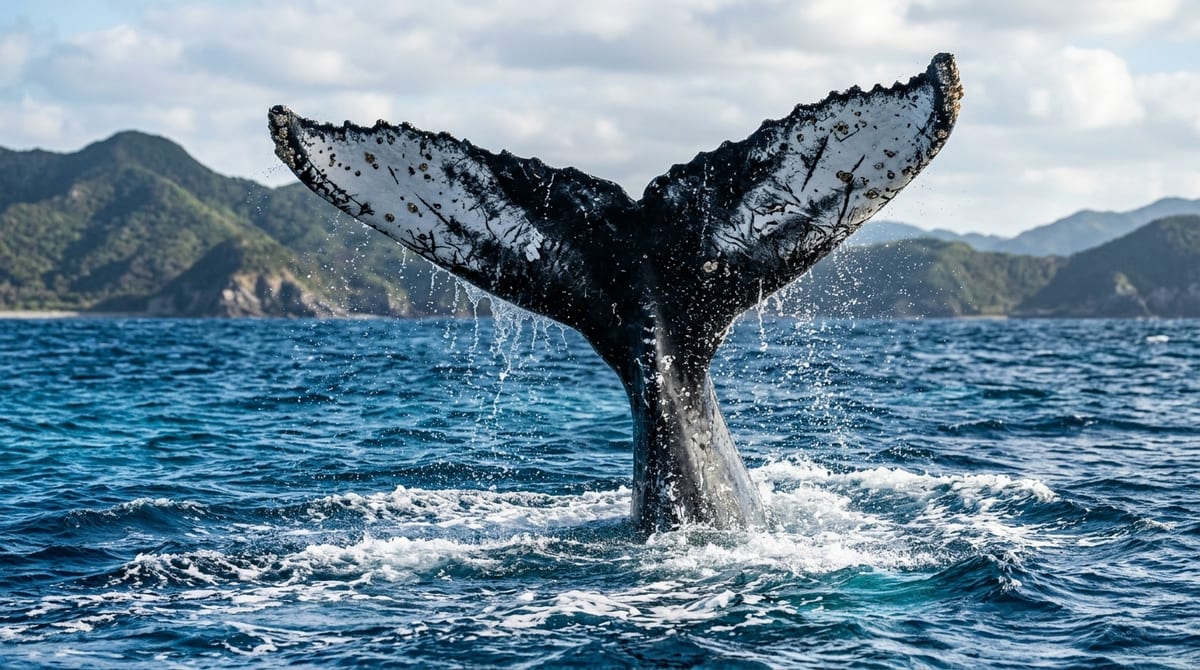
Every winter, while snow blankets northern Japan, one of the Pacific Ocean's greatest wildlife migrations unfolds in the subtropical waters of Okinawa. Starting in late December, hundreds of North Pacific humpback whales (Megaptera novaeangliae, known in Japanese as Zato-kujira) complete a 5,000-kilometer journey from the icy feeding grounds of Alaska, the Aleutian Islands, and Kamchatka to reach the sheltered waters of Kerama Shoto National Park.
In 2026, scientific surveys by the Okinawa Churashima Foundation record between 700 and 1,000 humpback whales wintering in Okinawa's waters each season, with over 1,900 individual whales cataloged by their unique tail fluke patterns. Measuring 13 to 15 meters (42 to 50 feet) in length and weighing up to 30 metric tons, these gentle giants come to Okinawa's 21°C (70°F) waters to mate, give birth, and nurse their newborn calves safe from killer whales.
Living in Okinawa since 2018, I have watched the local whale watching scene evolve dramatically: between small community boats in Zamami guided by hilltop spotters with telescopes and large commercial catamarans departing Naha, the experience on the water could not be more different. Here is my complete, honest resident guide to planning your winter whale watching trip in Okinawa.
- Exceptional Sighting Probability: In 2026, humpback whale encounter rates between mid-January and mid-March reach 95% to 98% across the Kerama Islands (Zamami Whale Watching Association, 2026).
- Three Departure Hubs: Choose Zamami Island for eco-certified small-boat encounters 15 minutes from port, Naha for car-free half-day convenience (4,500 to 6,000 JPY / ~$30-$40 USD), or Motobu to combine whale watching with northern Okinawa.
- Winter Swells & Seasickness Prep: Prevailing northern winter winds (Kisetsufu) create choppy swells in the Kerama strait; buy Japanese Aneron motion sickness capsules the night before and schedule your tour early in your trip in case of weather rescheduling.
When Is the Best Time to See Humpback Whales in Okinawa?
In 2026, seasonal tracking compiled by the Okinawa Convention & Visitors Bureau (Visit Okinawa Japan, 2026 Seasonal Report) confirms that the whale watching window runs from December 20 through April 5, with peak whale density occurring between January 15 and March 15. During these eight peak winter weeks, the steady presence of nursing mothers and calves ensures near-daily sightings across the Kerama channel.
On the water, each month of the winter season has a distinct personality, both in whale behavior and sea conditions:
- Late December to Mid-January (The Early Scouts): Adult males and pregnant females arrive first. Apart from the Japanese New Year holidays (December 29 to January 3), tourist crowds are low, though whales are more spread out.
- Mid-January to Late February (Peak Season & Calving): The prime window for dramatic surface courtship displays. Competitive groups of males perform head lunges and tail slaps to escort females, while newborn calves (measuring 4 meters / 13 feet and weighing 1 ton at birth) practice breaching beside their mothers.
- March to Early April (Whale Songs & Smoother Seas): The fierce north wind begins to subside, daytime air temperatures warm up to 20°C-22°C (68°F-72°F), and calves build strength for their northward trek. Scuba divers and snorkelers along the Kerama reefs can often hear the deep, haunting songs of male humpbacks echoing underwater miles away.
Naha vs. Zamami vs. Motobu: Which Departure Port Should You Choose?
In 2026, maritime operational records from Okinawa Prefecture and the Zamami Whale Watching Association (2025-2026 Marine Operations Summary) show that tours departing from Zamami Island reach active whale pods in just 15 to 25 minutes, compared to 45 to 75 minutes of open-ocean transit from Naha or Chatan harbors.
| Feature | ⛴️ Zamami Island (Keramas) | ⚓ Naha & Chatan (South/Central) | 🐋 Motobu & Ie-jima (North) |
|---|---|---|---|
| Experience Style | Authentic, scientific & intimate | Convenient, accessible & structured | Scenic, ideal for Northern road trips |
| Vessel Size | Small local launches (10 to 20 guests) | Large catamarans or cruisers (30 to 60 guests) | Mid-sized boats (15 to 35 guests) |
| Transit Time to Whales | 15 to 25 min (hilltop spotters) | 45 to 75 min open-water crossing west | 20 to 40 min (Ie-jima channel) |
| Total Tour Duration | 2.0 to 2.5 hours on the water | 3.0 to 4.0 hours (half-day AM or PM) | 2.5 to 3.0 hours |
| Adult Fare (2026) | 5,500 to 6,500 JPY (+ ferry ticket) | 4,500 to 6,000 JPY (~$30-$40 USD) | 5,000 to 6,000 JPY (~$33-$40 USD) |
| Seasickness Exposure | Low to moderate (short transit) | Moderate to high (open-sea crossing) | Moderate (partially sheltered channel) |
| Best For | Nature lovers staying in the Keramas | Car-free travelers based in Naha | Families visiting Motobu & Yanbaru |
Why Is Zamami Island the Ethical Heart of Kerama Whale Watching?
In 2026, the Zamami Whale Watching Association (2026 Environmental Charter) oversees more than 35 years of community-led conservation established in 1991, enforcing a strict 300-meter deceleration zone and 100-meter approach limit to protect nursing humpback mothers and calves from acoustic stress.
What makes Zamami unique in Japan is its land-based spotting network that avoids invasive sonar. Every winter morning starting at 8:30 AM, veteran spotters hike up to Inazaki Observatory (on the island's north ridge) and Takatsukiyama. Using high-powered tripod scopes, they scan 360 degrees of ocean horizon to spot the 4-meter white mist spouts (blows) of surfacing whales.
As soon as a pod or mother-calf pair is pinpointed, the hilltop spotters radio the exact coordinates via VHF to the small vessels waiting in Zamami Port. Boats never burn fuel crisscrossing empty ocean at high speed, you board only when whales are confirmed nearby, and captains rotate turns so that no more than 2 to 3 small boats observe the same pod simultaneously.
Can You Spot Whales from Shore on Zamami Without Boarding a Boat?
Yes, you can! If you suffer from severe motion sickness or are traveling with toddlers, you can rent an electric-assist bicycle in Zamami village and ride up to Inazaki Observatory (Kujira no Tenbodai, literally the "Whale Lookout"). On clear days, using complimentary telescopes or your own binoculars alongside the local spotters, you can watch spouts, tail slaps, and full breaches with the naked eye across the strait toward Tokashiki and Aguni. To plan your ferry crossing from Naha's Tomari Port aboard the Queen Zamami high-speed vessel or theFerry Zamami, read our full guide: Visiting the Kerama Islands: Tokashiki, Zamami & Aka Guide.
How Do Whale Watching Cruises Work from Naha and Motobu?
In 2026, according to passenger logs from Miegusuku Port operators in Naha (Visit Okinawa Japan, 2026 Winter Marine Guide), over 75% of visitors choose a half-day excursion departing from Okinawa Main Island (Okinawa Hondo), with daily departures at 9:00 AM and 1:30 PM.
1. Departing from Naha (Miegusuku & Tomari)
The most practical option if you are based in Naha or traveling without a car (see our guide to visiting Okinawa without a car).
- Route: Cruisers depart Miegusuku Port and sail west toward the outer uninhabited Kerama islets (Maejima, Kuroshima, Nagannu).
- Upside: No need to coordinate municipal ferry tickets to Zamami. Within 3.5 hours, you are back in Naha for lunch or Shuri Castle.
- Trade-off: Multiple commercial boats may converge on the same pod, and the 50-minute open-water transit each way can be bumpy in strong north winds.
2. Departing from Motobu or Chatan
Ideal if you have a rental car and are staying in central or northern Okinawa (see Where to Stay in Okinawa).
- Motobu / Toguchi Port (North): Boats cruise the channel between Motobu Peninsula, Sesoko Island, and volcanic Ie-jima with Mount Gusuku in the background.
- Less crowding: Far fewer vessels operate in the northern channel compared to Naha.
- Chatan / Hamby Port (Central): Convenient departure hub if you are staying in Onna Village or Chatan.
5 Iconic Humpback Whale Behaviors & Winter Survival Rules
In 2026, behavioral studies by the Okinawa Churashima Foundation indicate that while an adult humpback whale holds its breath for 10 to 15 minutes on average, a nursing calf must surface for air every 3 to 5 minutes. Keep your camera ready for Breaching (launching 30 tons out of the ocean), Pectoral Slapping (slapping its 5-meter white fins), Tail Slaps, Spyhopping (rising vertically to inspect boats), and the iconic Fluke-Up Dive.
In 2026, meteorological records from the Japan Meteorological Agency (JMA) show that January and February daytime air temperatures average 14°C to 19°C (57°F to 66°F), while prevailing north-northeast winter winds blow at 6 to 9 m/s (13 to 20 mph), dropping the windchill temperature on an open boat deck below 10°C (50°F).
- Dress for a brisk North Atlantic or Pacific Northwest ferry crossing: Wear a warm fleece or light down mid-layer, a windproof and waterproof hooded shell jacket (essential against sea spray), long pants, and non-slip closed-toe shoes.
- Use Japan's gold-standard seasickness remedy (Aneron): Winter swells in the Kerama channel are steep and closely spaced. Stop by any Japanese pharmacy (Matsumoto Kiyoshi, Sugi Drug, or Daikoku Drug) the evening before and pick up Aneron "Nisscap" (アネロン ニスキャップ). Take one capsule 30 minutes before boarding for 24-hour protection (note: it can cause mild drowsiness, so avoid taking it right before driving).
- Book your whale tour for Day 1 or Day 2 of your stay: Roughly 20% to 30% of winter sailings are cancelled by captains when offshore swells exceed 2.5 to 3 meters. Booking early in your trip gives you flexibility to reschedule for a calmer day later in the week.
- Boycott unregulated "Whale Swim" boats: A handful of uncertified operators drop snorkelers directly into the path of whales off Naha. This disrupts nursing mothers, forces calves to burn vital energy reserves, and is strictly banned by Zamami Village and Okinawa marine researchers. Always choose operators committed to passive deck-based observation.
In strict compliance with the Japanese Travel Agency Act (Ryokogyoho), Breizh & Ryukyu operates exclusively as a private local guide and cultural interpreter. We never sell bundled all-inclusive packages: all whale watching boat tickets and municipal ferry fares arepaid directly on site by travelers to licensed local maritime operators (we gladly help you select and book ethical, eco-certified vessels). For overland travel on Okinawa Main Island, you may drive your own rental car (requires a valid 1949 Geneva IDP or official JAF translation, with strict 0.00 g/L zero-alcohol enforcement) or arrange a licensed green-plate charter taxi or van.
Frequently Asked Questions About Okinawa Whale Watching
When is the best time for whale watching in Okinawa?
In 2026, the official Okinawa whale watching season runs from late December through early April, with peak sightings between mid-January and mid-March. During this peak window, 700 to 1,000 North Pacific humpback whales gather in the archipelago and sighting rates reach 95% to 98% according to the Zamami Whale Watching Association.
Should I book a whale watching boat from Naha, Zamami, or Motobu?
Choose based on your itinerary and seasickness sensitivity. Zamami Island offers the most ethical, intimate experience right inside the breeding sanctuary (only 15 to 25 minutes of boat transit thanks to shore spotters). Naha suits travelers without a rental car (3.5-hour half-day trips for 4,500 to 6,000 JPY). Motobu in the north pairs well with Churaumi Aquarium and Yanbaru.
How much does a whale watching tour cost in Okinawa?
In 2026, expect to pay 4,500 to 6,000 JPY per adult (~$30 to $40 USD) for a half-day tour departing from Naha or Chatan, and 5,500 to 6,500 JPY (~$36 to $43 USD) on Zamami Island (excluding the Naha-Zamami municipal ferry ticket). All fees are paid directly on site to licensed maritime operators.
Can you swim with humpback whales in Okinawa?
No. Inside Kerama Shoto National Park (Zamami, Tokashiki, and Aka), in-water whale swimming is strictly prohibited by the Zamami Whale Watching Association to protect nursing mothers and newborn calves from exhaustion. All ethical observation is conducted from the boat deck at a regulated 100-to-300-meter buffer distance.
What happens if no whales are sighted or if rough winter seas cancel the boat?
If the captain cancels the departure due to high northern winter swells (common in January and February), licensed operators provide a 100% refund or free rescheduling. Between February 1 and March 15, most Naha operators also offer a sighting guarantee (free re-boarding or refund) if zero whales are spotted.

Pair Your Winter Whale Tour with a Private Cultural or Nature Day
Based in Nago, I help travelers pair winter whale watching in Motobu or Naha with January Kanzakura cherry blossoms on Mount Yae, UNESCO Yanbaru rainforest treks, or historic Shuri royal heritage walks.