
Visiting Okinawa Without a Car: Yui Rail Monorail, Express Buses & Island Ferries
"Can I really enjoy Okinawa if I don't have an international driving permit or feel nervous driving on the left?" It is one of the most frequent dilemmas shared by international visitors. While travel guidebooks often claim Okinawa is strictly "car-only," you can enjoy a deeply memorable, culturally rich holiday by combining Naha's monorail, scenic express highway coaches, and island ferries.
Make Breizh & Ryukyu your preferred source on Google
Get our newest Okinawa stories, travel tips and itineraries featured directly in your search results.
🚦What Works Great (and What Doesn't) Without a Car
- Naha City: Shuri Castle, Makishi Market, Kokusai Dori, Tsuboya pottery alleys via Yui Rail.
- Churaumi Aquarium & Motobu: Direct express buses from Naha airport in 2h15.
- Chatan (American Village) & Onna Resorts: Frequent airport shuttle buses.
- Kerama Islands: High-speed passenger ferries directly from Naha port.
- Deep Yanbaru Rainforest (UNESCO): Cape Hedo and secret river cascades have minimal rural bus coverage.
- Hidden Eastern Coast Coves: Natural snorkeling beaches without bus stops.
- Fast Multi-Stop Sightseeing: Connecting 4 remote venues in a single day is impractical by public bus.
1. The Yui Rail Monorail: Naha's Urban Backbone
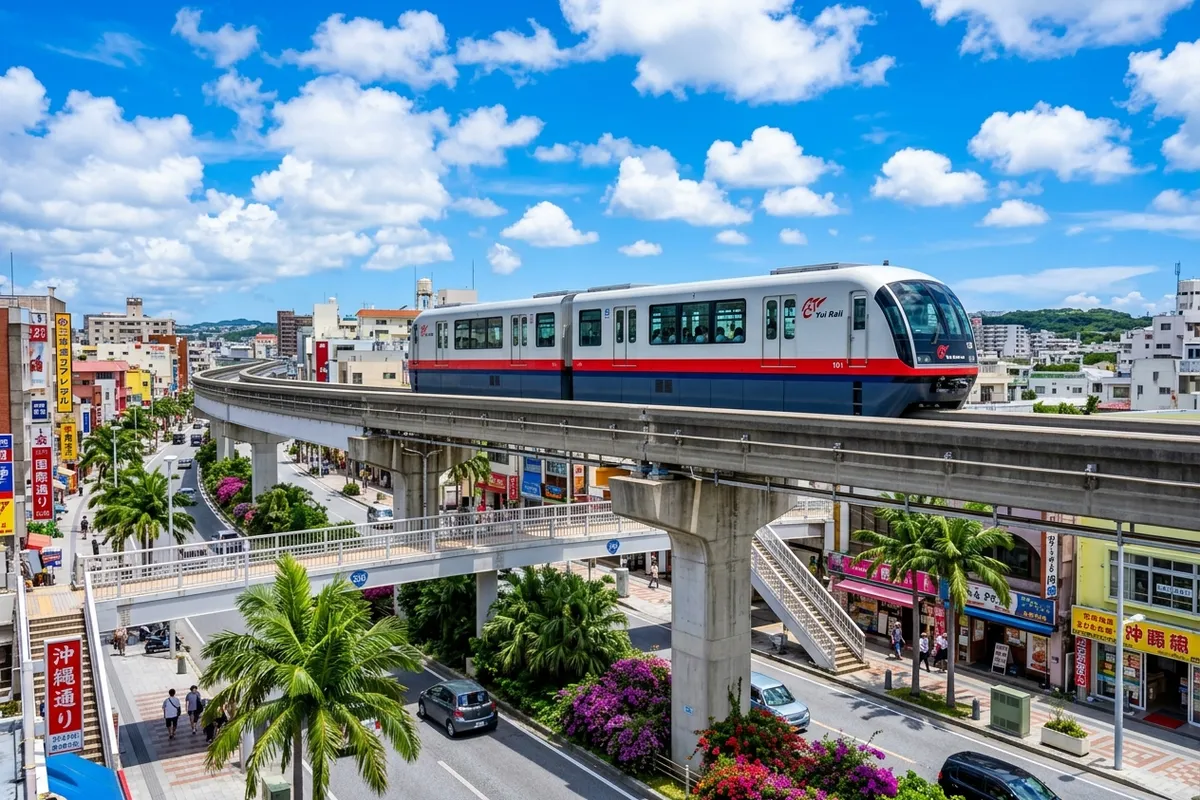
For exploring the capital, the elevated Yui Rail is punctual, clean, air-conditioned, and provides lovely panoramic views over the rooftops of Naha.
- Route: Connects Naha International Airport (OKA) to the eastern terminus of Tedako-Uranishi across 19 stations. Key stops include Asahibashi (main central bus terminal), Kencho-mae (west end of Kokusai Dori), Miebashi (gateway to Tomari ferry port), and Shuri (royal castle historical park).
- Travel Time: Only 30 minutes from the airport to Shuri Station.
- Frequency: Trains depart every 4 to 8 minutes from 6:00 AM to 11:30 PM.
- Payment: Japanese IC transit cards (Suica, Pasmo, ICOCA) and the local OKICA card tap seamlessly at turnstiles. Single QR-code paper tickets cost between 230 and 370 JPY.
- Unlimited Passes: A 24-hour pass costs 800 JPY, and a 48-hour pass costs 1,400 JPY, calculated from hour of purchase (e.g. 2:00 PM today to 2:00 PM tomorrow).
2. Reaching the North: Direct Express Highway Buses
You do not need to navigate complex rural transfers to reach northern coastal highlights. Two direct express services operate daily from Naha Airport and Asahibashi Bus Terminal:
Yanbaru Express Bus (Line 888)
This comfortable highway coach bypasses city traffic via the Okinawa Expressway, stopping at Nago city hall, Motobu port, the Ocean Expo Park (Okinawa Churaumi Aquarium), and northern resort hubs.
- Fare: Around 2,000 JPY from Naha to Churaumi Aquarium.
- Luggage: Spacious luggage compartments beneath the bus for suitcases.
Okinawa Airport Shuttle (OAS)
Modern buses with free onboard Wi-Fi and online seat reservations in English. Connects Naha Airport directly with central Onna resort beaches, Nabee Beach, and Churaumi Aquarium in approximately 2 hours and 15 minutes.
3. Taking Local City & Regional Buses: The Golden Rules
For regional travel outside express highways, local buses (Okinawa Bus, Ryukyu Bus, Naha Bus) follow standard Japanese bus etiquette:
- Board from the Front or Rear: In Naha flat-rate buses, board at the front and pay standard fare. On regional distance-based buses, board through the rear door and pull a small numbered paper ticket (Seiriken) from the dispenser.
- Check the Fare Screen: The electronic display at the front of the bus shows your ticket number and the rising fare in yen.
- Paying Your Fare: When your stop is announced, press the buzzer. Drop the exact fare and paper ticket into the fare box next to the driver. The machine can break 1,000 JPY banknotes into coins, but cannot change 5,000 or 10,000 JPY notes. Always keep a pocket of 100 JPY coins!
Want to see secret northern spots without waiting for sparse buses?
If you want to explore the untamed rainforest of Yanbaru, private coastal viewpoints, or craft distilleries without driving on the left, book a private cultural guide. In strict compliance with Japanese transport laws, we coordinate licensed professional taxi partners or walk with you step by step.
Explore Private Guiding Options→4. Island Ferries from Tomari Port (Tomarin)
One of the greatest advantages of staying in Naha without a car is immediate proximity to Tomari Ferry Port (Tomarin), located just a 10-minute walk from Miebashi monorail station.
From here, high-speed passenger hydrofoils whisk you across open water in 35 to 50 minutes to the Kerama Islands National Park:
- Tokashiki Island: Marine Flyer high-speed ferry (35 min).
- Zamami & Aka Islands: Queen Zamami high-speed hydrofoil (50 min).
Once on the islands, village community buses or electric rental bicycles transport you between snorkeling beaches and scenic lookouts without any car rental required. Read our full Kerama Islands Guide for detailed ferry booking instructions.
Frequently Asked Questions About Transit in Okinawa
Do Suica and Pasmo IC cards work on all buses in Okinawa?
Suica, Pasmo, and ICOCA cards work on 100% of the Yui Rail monorail and on major airport express buses. However, smaller rural buses in the north sometimes only accept cash or the local OKICA card. Always carry small cash.
Are taxis expensive for day trips in Okinawa?
Short hops within Naha cost between 600 and 1,500 JPY. For full-day sightseeing across the island, chartered sightseeing taxis (with licensed green-plate professional drivers) cost approximately 25,000 to 38,000 JPY per vehicle for 6 to 8 hours.