
Okinawa Food Guide: Traditional Soba, Goya Champuru & Secret Izakaya Culture
Okinawan cuisine (Ryūkyū Ryōri) shares very little in common with Tokyo or Kyoto gastronomy. Shaped by centuries of maritime trade with imperial China, Southeast Asian kingdoms, and post-war American influences, island cooking is rustic, generous, and renowned for supporting the celebrated longevity of Okinawa centenarians.
Make Breizh & Ryukyu your preferred source on Google
Get our newest Okinawa stories, travel tips and itineraries featured directly in your search results.
🥢4 Iconic Dishes Every Traveler Must Taste
The 4 Pillars of Daily Okinawan Cuisine
1. Okinawa Soba: Pure Comfort in a Steaming Bowl
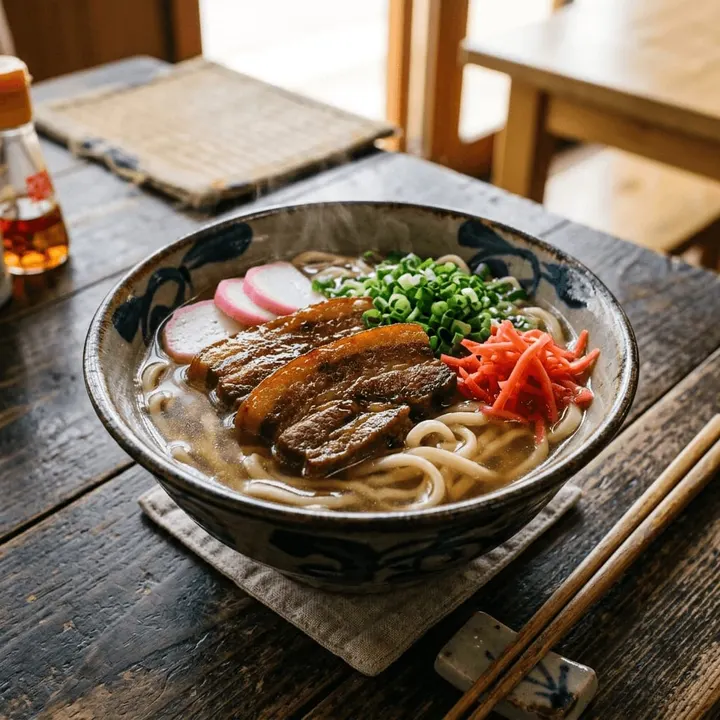
Unlike mainland Japanese soba made from buckwheat flour, Okinawa Soba contains zero buckwheat. It is crafted entirely from wheat flour, resulting in a thick, undulating noodle with a satisfying chewiness akin to a flat udon or hearty ramen.
The broth is clear yet deeply savory, simmered for hours using pork bones and shaved bonito flakes (katsuobushi). Bowls are garnished with sliced fish cake (kamaboko), finely chopped scallions, bright red pickled ginger (beni shōga), and a signature meat topping: either caramelized pork belly (Rafute) or whole stewed pork ribs with cartilage rendered deliciously soft and translucent (Sōki).
2. Gōyā Champurū: The Island Superfood Stir-Fry
In the local Okinawan dialect (Uchināguchi), Champurū means "hodgepodge" or "mixed together." This beloved household staple brings together sliced bitter melon (Gōyā), extra-firm island tofu (Shima-dōfu, which holds its shape in high-heat woks), whisked eggs, and sliced pork (or SPAM, an island obsession inherited from post-war American troop rations).
While the initial bite surprises with its sharp herbal bitterness, it rapidly becomes addictive. Goya is packed with heat-resistant vitamin C and powerful antioxidants frequently linked by researchers to the island's low rates of chronic illness.
3. Rafutē: Royal Banquet Simmered Pork
Inherited from the royal feasts of Shuri Castle, Rafutē showcases pork, the undisputed king of Okinawan meats. Thick cubes of pork belly are initially blanched to render out excess oil, then simmered over gentle embers for hours in a master reduction of dark soy sauce, unrefined island black sugar (Kokutō), and aged Awamori spirit.
When served, the skin turns gelatinous and silky, while the meat is so tender it yields effortlessly between chopsticks.
4. Umibudō: The Fresh "Green Caviar"
Also called "sea grapes," this vivid emerald seaweed (Caulerpa lentillifera) resembles tiny clusters of miniature pearls. Harvested in pristine shallow lagoons, it cannot tolerate refrigeration or heat.
Served at room temperature with a dip of ponzu or local Shīkwāsā citrus juice, Umibudo pops delicately between your teeth, releasing a refreshing ocean salinity. It is the quintessential izakaya appetizer.
Experience an authentic family izakaya with a bilingual local guide
Overcome language barriers and secret Japanese-only menus. Join Arnaud for an exclusive private evening: handpicked neighborhood taverns, rare vintage awamori, seasonal Ryukyu dishes, and live Sanshin folk songs.
Discover the Izakaya Night Experience→For Adventurous Palates: Rural & Ancient Specialties
According to the most famous local saying: "In a pig, we eat everything except the squeal" (蹄から耳まで、鳴き声以外は全部食べる). Beyond casual noodles and stir-fries, traditional village culture includes deep ancestral delicacies:
- Hījā (Okinawan Goat): Consumed either raw as finely sliced sashimi (Hījā Sashimi) accompanied by grated ginger and soy sauce, or simmered in a potent herbal bone stew (Hījā Jiru) seasoned with wild mugwort (Fūchibā) to balance its gamey vigor.
- Tebichi (Simmered Pig Trotters): Braised for half a day until the skin becomes rich with collagen, served in bowls of piping-hot dashi.
- Chiirichā: A rustic village stir-fry incorporating fresh pork blood, pork cuts, and local root vegetables, traditionally cooked during village pig butchering festivals.
Izakaya Etiquette: How to Toast Like a Local
While "Kanpai" is recognized everywhere in Japan, the authentic Okinawan toast is "Karii!" (カリー / 嘉例). In the island dialect, this word invokes good fortune, joy, and celebration.
When dining at an izakaya:
- The Otoshi: A small appetizer will be served immediately with your drinks. This is the standard Japanese table charge (typically 300 to 500 JPY per person).
- Sharing is Standard: Dishes arrive as they are cooked and are meant to be placed in the center of the table and shared using small individual plates (Torizara).
- Drinking Awamori: Order a carafe of Awamori served with an ice bucket and cold water (Mizuwari) to mix your own refreshing highball.
Frequently Asked Questions About Okinawan Food
Are Okinawa soba gluten-free?
No. Unlike mainland buckwheat soba, Okinawa soba noodles are made from 100% wheat flour and contain gluten.
Do I need advance reservations for local izakayas?
Yes, especially for popular neighborhood counters in Naha (Sakaemachi market alleys) and coastal villages. The best family taverns seat fewer than 15 guests and feature handwritten Japanese-only menus.